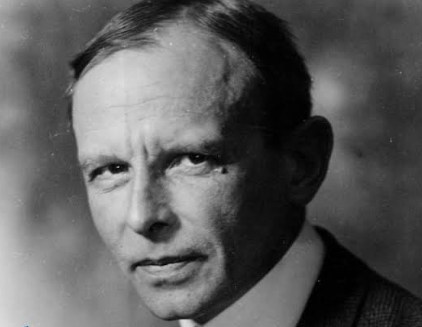
Karl Terzaghi: The Father of Soil Mechanics

Ask most site engineers where the field of soil mechanics actually came from, and you’ll get a shrug. It’s one of those foundational disciplines — literally — that engineers use every day without necessarily knowing whose work made it possible. Karl Terzaghi is the answer, and understanding why matters for anyone whose work touches foundations, excavation, or ground conditions.

Karl Terzaghi (1883–1963) was an Austrian civil engineer, geologist, and geotechnical pioneer widely recognized as the father of modern soil mechanics. Before his work, foundation engineering relied heavily on empirical rules of thumb and precedent rather than a genuine scientific understanding of how soil actually behaves under load. Terzaghi changed that fundamentally, and the effects of that change are still embedded in how engineers approach ground conditions today.

SITE ENGINEER DAILY STARTER CHECKLIST

Free practical checklist for daily site inspections, workforce control, safety tracking, and reporting.

Join 1000+ engineers learning real construction skills

Used by real construction site engineers for daily site control.

Early Life and the Path to Soil Mechanics

Born in Prague in 1883, Terzaghi studied mechanical engineering at the Technical University of Graz, which might seem like an unusual starting point for someone who would go on to redefine geotechnical engineering. That mechanical engineering background, though, gave him a strong grounding in theoretical mechanics — the kind of rigorous, physics-based thinking that soil mechanics as a discipline didn’t yet have.

After his studies, Terzaghi worked as a consulting engineer specializing in foundation work. It was through direct, practical engagement with real foundation problems — not purely academic theorizing — that he began to recognize a significant gap: engineers were designing foundations without any genuinely scientific framework for predicting how soil would actually behave. Decisions were based on experience and rule-of-thumb assumptions rather than a coherent theory grounded in measurable soil properties.

The Breakthrough: Erdbaumechanik

Terzaghi’s defining contribution was his 1925 book Erdbaumechanik, which established soil mechanics as a genuine scientific discipline rather than a collection of empirical practices passed down through experience.

The book introduced a unified theoretical framework connecting geology, physics, and mechanics to explain how soil actually responds to load, water, and disturbance. Among its most consequential contributions was the effective stress principle — the concept that the strength and behavior of soil depends on the stress carried by the soil particles themselves, separate from the pressure carried by water within the soil’s pores. This distinction sounds abstract, but it’s genuinely foundational: it explains why saturated soils behave so differently from dry ones, why excess pore pressure can trigger settlement or failure, and why understanding water content is inseparable from understanding soil strength.

This principle alone reshaped how engineers approached foundation design, slope stability, and consolidation — problems that had previously been addressed through experience-based judgment rather than a predictive scientific model.

Why This Matters for Practicing Engineers Today

It would be easy to file Terzaghi’s work under “interesting history” and move on, but the concepts he established are still the working foundation — again, literally — of how geotechnical engineering operates today.

Every time a geotechnical report discusses effective stress, consolidation settlement, or bearing capacity based on soil properties rather than assumption, that analysis traces its lineage directly back to Terzaghi’s framework. Modern soil testing methods, foundation design codes, and even the basic vocabulary geotechnical engineers use to describe soil behavior all developed from the theoretical groundwork he laid. Understanding this isn’t just academic appreciation — it’s a reminder that the geotechnical calculations underlying a project’s foundation design rest on a genuinely tested, century-old scientific framework, not an arbitrary set of rules.

Terzaghi’s Consolidation Theory

Beyond the effective stress principle, Terzaghi developed a mathematical theory of consolidation that remains in active use in geotechnical practice today — the process describing how saturated soil gradually compresses over time as pore water is squeezed out under sustained load.

This theory explains a phenomenon every geotechnical engineer has to account for: why a structure built on clay or other fine-grained soil can continue settling for months or years after construction, long after the load itself was applied. Terzaghi’s one-dimensional consolidation theory provides the mathematical framework to predict both how much settlement will occur and how long it will take — a capability that simply didn’t exist in a rigorous form before his work. This theory is still taught, applied, and referenced in essentially unchanged form in modern geotechnical engineering courses and practice.

Bearing Capacity and Foundation Design

Terzaghi also developed one of the most widely used bearing capacity theories in foundation engineering — a method for calculating the maximum load a soil can support beneath a foundation before shear failure occurs.

This bearing capacity equation, developed in the late 1940s, became a standard tool for foundation design worldwide and remains a reference point in geotechnical engineering education and practice, even as more refined and computer-based methods have since been developed to handle more complex site conditions. The fact that a formula developed in the 1940s still forms part of the conceptual foundation for how engineers approach bearing capacity today says something about how fundamentally sound the underlying theory was.

Academic Career and Institutional Influence

Terzaghi’s influence extended well beyond his own research through decades spent teaching and mentoring at leading institutions, including Robert College in Istanbul, the Technical University of Vienna, MIT, and Harvard University.

In 1936, he became the founding president of the International Society for Soil Mechanics and Geotechnical Engineering, an organization that continues to coordinate geotechnical research and practice standards globally. His later work, particularly the 1943 book Theoretical Soil Mechanics, further systematized the discipline and became a standard reference text for generations of engineers trained after him. Through both his own students and the institutions he helped shape, Terzaghi’s influence propagated well beyond what any individual research contribution could have achieved alone.

The Failures That Shaped His Thinking

Terzaghi’s push toward a genuinely scientific approach to soil behavior wasn’t purely theoretical curiosity — it was motivated in part by real engineering failures that empirical, experience-based methods had failed to prevent.

One of the most frequently cited cases from this era is the 1913 Transcona grain elevator failure in Manitoba, Canada, where a massive concrete grain silo tilted dramatically after being filled, due to the underlying clay soil’s bearing capacity being far lower than assumed. The structure itself remained largely intact — it simply rotated as the foundation soil failed beneath it — making it a striking, well-documented illustration of exactly the kind of problem that empirical foundation design consistently failed to predict. Cases like this underscored the gap Terzaghi’s generation of engineers faced: a genuine need for a predictive, scientific method of assessing soil bearing capacity, rather than an accumulation of past experience that offered no reliable way to anticipate failure before it happened.

This context matters because it reframes Terzaghi’s contribution not as an abstract academic pursuit, but as a direct response to real, costly, and sometimes dramatic engineering failures that a generation of engineers had witnessed and needed a genuine solution for.

Legacy and Recognition

Terzaghi’s influence on civil engineering was recognized extensively during and after his career. He received the Norman Medal and the Frank P. Brown Medal from the American Society of Civil Engineers, among numerous other honors, cementing his reputation as one of the most consequential figures in the history of civil engineering.

Beyond individual honors, his lasting legacy is structural in the truest sense: an entire engineering discipline that didn’t exist in a scientifically rigorous form before his work, and that now underlies the design of dams, bridges, foundations, and virtually every structure that interacts meaningfully with the ground beneath it.

How Terzaghi’s Principles Show Up on a Real Construction Site

It’s worth connecting these historical theories to what actually happens on an active site, because they’re not abstract academic concepts — they’re embedded in decisions made routinely during construction.

Every time a geotechnical report specifies allowable bearing pressure for a foundation, that figure traces back to bearing capacity theory Terzaghi helped establish. Every time a project schedules settlement monitoring over months after a structure is loaded — rather than assuming settlement is complete the moment construction finishes — that expectation comes directly from consolidation theory. And every time dewatering is planned before excavation in saturated ground, the underlying reasoning connects back to the effective stress principle: removing pore water pressure changes the effective stress in the soil, which is precisely why dewatering affects both excavation stability and the behavior of soil around it.

Understanding the theory behind these routine site decisions doesn’t just satisfy curiosity. It helps explain why certain checks — waiting for settlement to stabilize before finishing sensitive work, for instance, or taking soil saturation seriously during excavation planning — aren’t arbitrary caution. They’re direct, practical applications of a scientific framework that’s been tested and refined for a century.

A Quick Reference: Terzaghi’s Core Contributions

  • Established soil mechanics as a genuine scientific discipline through Erdbaumechanik (1925)
  • Introduced the effective stress principle, distinguishing soil particle stress from pore water pressure
  • Developed foundational theories of soil consolidation and settlement prediction
  • Created a framework connecting geology, physics, and mechanics for analyzing soil behavior
  • Influenced modern foundation design codes and geotechnical testing methodology still in use today

Free Site Engineering Resources

Get 10 Free Construction Checklists

Enter your email and receive practical site engineering checklists directly in your inbox.

Join Rigid Academy and get practical construction resources for site engineers.

We don’t spam! Read our privacy policy for more info.

Frequently Asked Questions (FAQ)

What is Terzaghi’s consolidation theory used for?

It’s used to predict how much a saturated, fine-grained soil like clay will settle under sustained load, and how long that settlement will take. This remains essential for anticipating long-term settlement after a structure is built, not just immediate settlement during construction.

What is Terzaghi’s bearing capacity theory?

It’s a method for calculating the maximum load a soil can support beneath a foundation before shear failure occurs, developed in the late 1940s. Despite more refined modern methods, it remains a standard reference point in foundation design and geotechnical education.

What role did Terzaghi play in establishing geotechnical engineering as an organized discipline?

He became the founding president of the International Society for Soil Mechanics and Geotechnical Engineering in 1936, and his teaching at institutions including MIT and Harvard helped train generations of engineers in the framework he established.

What is Karl Terzaghi best known for?

Terzaghi is best known as the father of modern soil mechanics, primarily for his 1925 book Erdbaumechanik, which established soil mechanics as a rigorous scientific discipline and introduced the effective stress principle.

What is the effective stress principle, and why does it matter?

The effective stress principle states that soil strength and behavior depend on the stress carried by soil particles themselves, distinct from pore water pressure. It explains why saturated soils behave differently from dry soils and remains fundamental to modern foundation and slope stability analysis.

How did Terzaghi’s background in mechanical engineering influence his work in soil mechanics?

His mechanical engineering training gave him a rigorous, physics-based approach to problems that soil mechanics, as a discipline, lacked at the time. This background allowed him to build a genuine theoretical framework rather than relying on the empirical rules of thumb common in earlier foundation engineering.

Why is Terzaghi’s work still relevant to engineers today?

Modern geotechnical concepts — effective stress, consolidation settlement, soil testing methodology, and foundation design codes — all trace their origins to the theoretical framework Terzaghi established. Practicing engineers use his principles, often without realizing their historical origin, every time they analyze soil behavior.

What honors did Karl Terzaghi receive for his contributions?

Terzaghi received the Norman Medal and the Frank P. Brown Medal from the American Society of Civil Engineers, among other honors, in recognition of his foundational contributions to geotechnical engineering.

This article is part of our complete guide to engineering case studies — see Secrets of Building Big Bridges for the full picture.

Leave a Reply

Scroll to Top

Discover more from Real Construction Knowledge — How Buildings Are Built, Inspected and Managed

Subscribe now to keep reading and get access to the full archive.

Continue reading