
The construction industry has always been the engine that drives civilization forward — from the pyramids of Egypt to the skyscrapers of Dubai. But behind every landmark structure lies a story of innovation in machinery and equipment. Over the decades, construction equipment has evolved from simple manual tools to complex, intelligent machines capable of performing tasks with precision and speed once unimaginable.
Today, construction sites are no longer defined by brute force — they’re powered by automation, artificial intelligence, and advanced data systems. At Rigid Academy, we believe that understanding this evolution is essential for every construction professional who wants to stay ahead in a rapidly transforming industry.
In this article, we’ll explore how construction equipment has evolved, the technologies shaping its future, and how innovation is changing the very nature of work on construction sites around the world.
From Manual Tools to Mechanized Power: A Brief History
The earliest forms of construction equipment were handcrafted tools — chisels, hammers, and wooden levers used by ancient civilizations. The Industrial Revolution in the 18th and 19th centuries marked the first major transformation. The introduction of steam power, followed by internal combustion engines, gave rise to mechanized equipment that revolutionized construction speed and scale.
Key Historical Milestones:
1800s: Steam shovels and cranes begin replacing manual labor.
1900s: The invention of diesel engines leads to modern excavators, loaders, and bulldozers.
1950s: Hydraulic systems introduce precision control in machinery.
2000s: Digital sensors, GPS, and automation reshape construction project management.
2020s and beyond: AI, robotics, and electric power redefine how construction equipment interacts with people and the environment.
Each of these stages didn’t just improve efficiency — they redefined what was possible in terms of design, productivity, and sustainability.
The Rise of Heavy Machinery
Modern construction sites depend on a wide range of specialized machines. Excavators, cranes, bulldozers, and graders perform tasks that once required hundreds of workers. These machines have evolved in terms of power, efficiency, and precision.
1. Excavators and Earthmovers
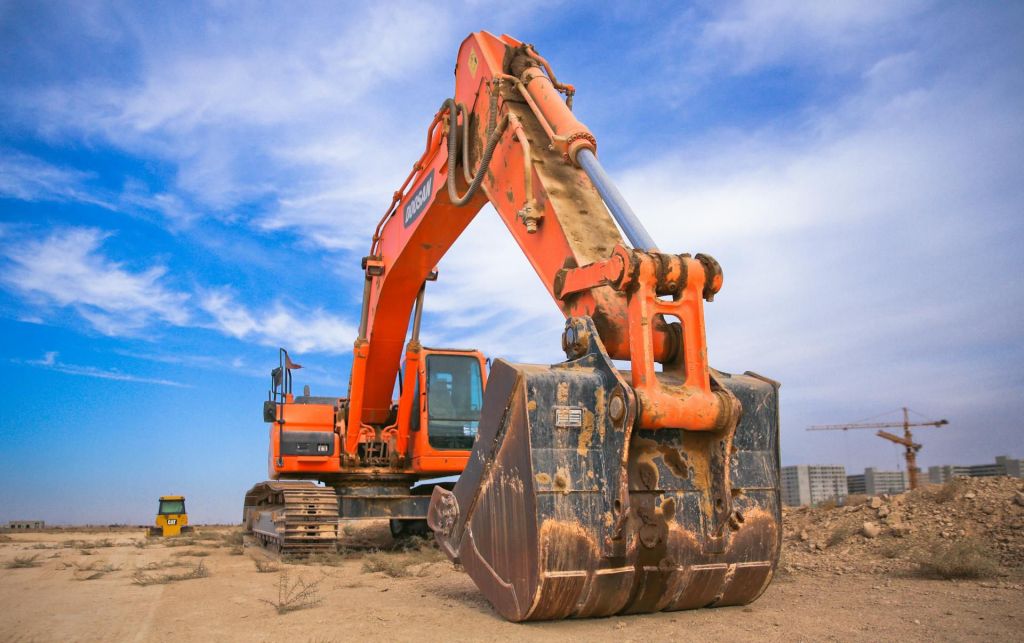
Modern excavators use advanced hydraulic systems, allowing precise control even in tight spaces. GPS-guided excavators can dig with millimeter accuracy, reducing rework and waste.
2. Cranes
Tower cranes and mobile cranes have become taller, stronger, and more stable thanks to lightweight materials like high-tensile steel and composite booms. Sensors now monitor load stress in real-time, ensuring safety and balance.
3. Bulldozers and Loaders
The evolution of engines and traction systems has made bulldozers smarter and more fuel-efficient. Autonomous bulldozers are now being used in large-scale projects, especially in mining and infrastructure.
4. Concrete and Road Equipment
Automated concrete pumps, pavers, and asphalt finishers now work in harmony with digital site models — ensuring uniform quality and reduced human error.
The Digital Revolution: Smart and Connected Equipment
The most significant change in recent years is digitization. Construction equipment is no longer isolated; it’s part of a connected ecosystem powered by data and artificial intelligence.
Telematics and IoT
Telematics systems collect data from equipment in real time — tracking performance, fuel use, and maintenance needs. This allows companies to predict breakdowns before they happen and optimize fleet performance.
GPS and Machine Control
GPS integration enables automated grading, leveling, and site positioning. Operators can follow 3D models directly on-screen, increasing accuracy and cutting rework time.
AI and Predictive Analytics
Artificial intelligence helps equipment “learn” from operational data, improving performance and reducing idle time. For instance, AI systems can recommend optimal routes for dump trucks or detect unsafe operating patterns.
At Rigid Academy, we often emphasize how digital literacy is becoming as important as mechanical skill in modern construction. Engineers who understand how to interpret and use data will lead the next era of smart construction.
Automation and Robotics in Construction Equipment
Automation is the defining force of modern construction. The global push for faster, safer, and more efficient building has led to the rise of robotic machinery capable of performing repetitive or hazardous tasks with precision.
烙 Examples of Automated Equipment:
Autonomous Excavators: Guided by LiDAR and GPS, these machines can dig trenches or foundations without human operators.
Drones: Used for surveying, inspection, and project progress monitoring, drones collect data far faster than traditional methods.
3D Printing Robots: Large-scale robotic printers can construct entire walls or building shells using concrete or composite materials.
Bricklaying Robots: Machines like Hadrian X can lay thousands of bricks per hour, reducing manual labor and time on site.
Automation not only increases efficiency but also enhances safety by keeping workers away from dangerous environments such as tunnels, high elevations, and unstable grounds.
Green Technology and Electric Equipment
Sustainability has become a global priority. Construction equipment manufacturers are responding with innovations in electric power, hybrid systems, and low-emission engines.
Electric Excavators and Loaders: Companies like Volvo and Caterpillar have developed battery-powered machines that produce zero on-site emissions.
Hybrid Cranes: These use energy recovery systems to reduce fuel consumption and noise.
Hydrogen-Powered Machines: Emerging technology using hydrogen fuel cells offers longer operational hours compared to traditional batteries.
These innovations not only reduce environmental impact but also help companies meet stricter emission regulations and attract eco-conscious clients.
At Rigid Academy, we believe that sustainable technology will define the next wave of competitiveness in the construction industry — making “green machinery” not just an ethical choice but a smart business decision.
The Human Factor: Operator Assistance and Safety
While machines are becoming smarter, the human element remains central to success. Modern construction equipment now includes operator-assist systems to improve safety and reduce fatigue.
Examples:
Collision Avoidance Systems: Sensors detect obstacles and warn operators in real-time.
Fatigue Monitoring: Cameras track facial movements to detect signs of exhaustion.
Ergonomic Cab Designs: Improved visibility, air conditioning, and automated controls reduce operator stress during long shifts.
Safety has become the top priority in modern construction. Advanced machinery helps minimize accidents while maintaining productivity — creating a safer and more efficient job site.
Future Innovations: What’s Next?
The next generation of construction equipment will be defined by full automation, connectivity, and intelligence. Some of the most promising trends include:
AI-Powered Fleet Coordination: Machines communicating autonomously to optimize workflow.
Digital Twin Integration: Virtual replicas of job sites used to monitor real-time machine performance.
Augmented Reality (AR): Operators using AR glasses to see underground utilities or design overlays.
Blockchain in Equipment Tracking: Secure systems for verifying maintenance and ownership records.
Self-Healing Materials: Equipment parts that automatically repair micro-damage, reducing downtime.
The future will not just be about stronger or faster machines — it will be about smarter and more sustainable machines that can think, adapt, and communicate.
How Rigid Academy Supports Modern Construction Engineers
At Rigid Academy, we are dedicated to helping engineers, project managers, and equipment operators adapt to this fast-changing environment. Through our guides, tutorials, and training programs, we aim to bridge the gap between traditional engineering skills and emerging technologies.
We believe that understanding the evolution of construction equipment is not only about knowing history — it’s about preparing for the future. Engineers who can integrate digital tools, automation, and sustainability into their projects will lead the construction industry’s next great leap.
Conclusion: Building the Future with Innovation
The evolution of construction equipment mirrors humanity’s own progress — from muscle power to machine power, and now to intelligent power.
As technology continues to evolve, the line between human and machine collaboration will blur, creating new possibilities for faster, safer, and more sustainable construction. The future belongs to those who embrace innovation, master technology, and continue to learn.
At Rigid Academy, our mission is to empower that future — one engineer, one project, and one innovation at a time.
 Rigid Academy-Building is an Art
Leave a comment