
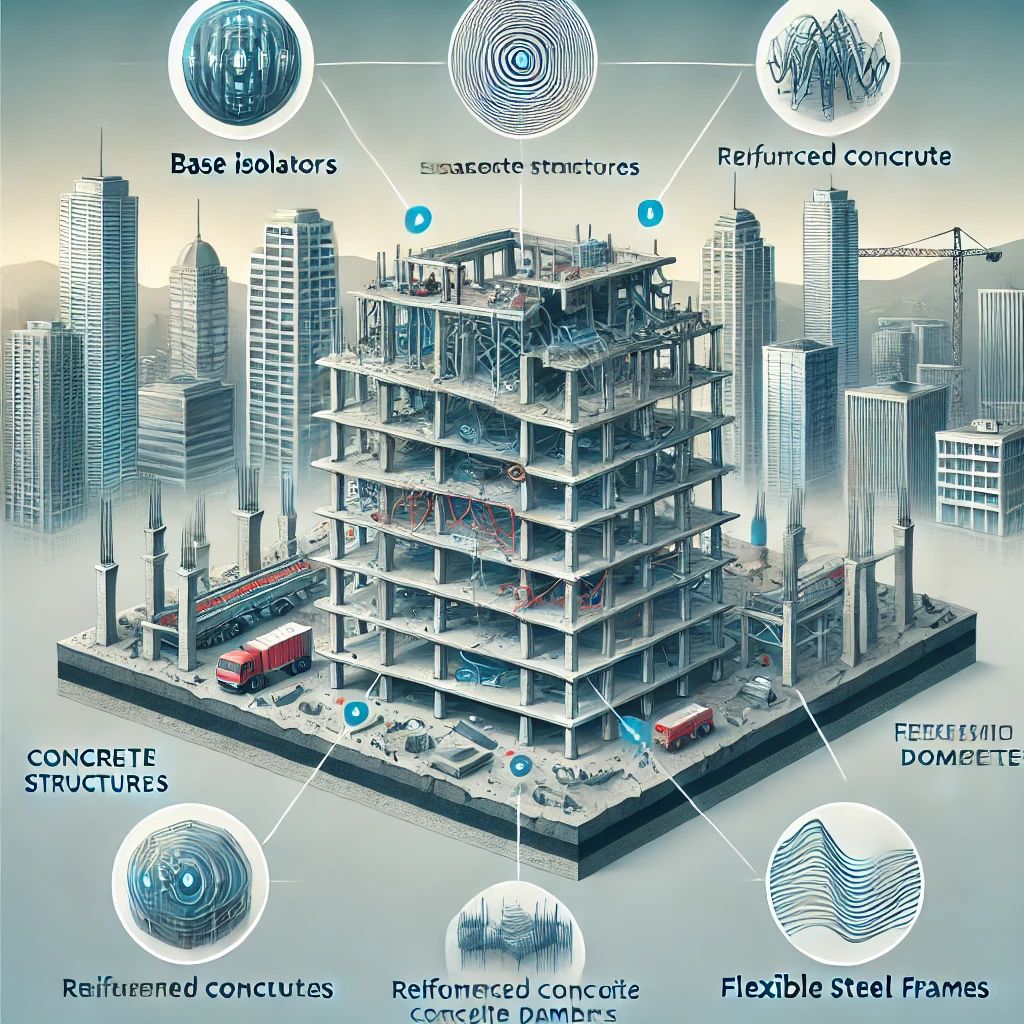
Standards for Construction Design Against Earthquakes
Earthquakes are one of the most devastating natural disasters, capable of causing widespread destruction and loss of life. Their unpredictable nature makes it essential to design buildings that can withstand seismic forces. Structural engineers and architects must adhere to strict standards and guidelines to ensure the safety of buildings, infrastructure, and their occupants. This article explores the global and regional standards for earthquake-resistant construction, the principles behind them, and how they contribute to safer structures.
Understanding Earthquake Forces
Before diving into the standards, it is crucial to understand the forces generated during an earthquake. An earthquake occurs due to the sudden release of energy in the Earth’s crust, generating seismic waves that travel through the ground. These waves cause:
- Ground Shaking – Vibrations that move the building in different directions.
- Ground Rupture – The displacement of land along a fault line.
- Soil Liquefaction – When saturated soil behaves like a liquid due to intense shaking.
- Lateral Forces – Horizontal movements that push and pull the structure.
All these forces can compromise the integrity of buildings if they are not designed correctly.
Key Principles of Earthquake-Resistant Design
To combat these forces, earthquake-resistant structures rely on several key design principles:
- Ductility – The ability of a building material to deform without breaking. Steel reinforcement in concrete structures provides this flexibility.
- Strength and Stiffness – Buildings must have enough strength to resist forces and enough stiffness to limit excessive deformation.
- Redundancy – The presence of multiple load paths to distribute forces if one element fails.
- Seismic Isolation and Energy Dissipation – Technologies like base isolators and dampers help absorb seismic energy.
- Proper Foundation Design – A well-designed foundation can prevent structural failure during an earthquake.
International Earthquake Design Standards
Different countries have their own standards for earthquake-resistant construction. However, many follow the guidelines set by international organizations. Some of the most widely used standards include:
1. International Building Code (IBC)
The IBC, developed by the International Code Council (ICC), is one of the most widely adopted building codes in the world. It incorporates seismic design requirements based on ASCE 7 (American Society of Civil Engineers). The key elements include:
- Seismic zoning maps to determine risk levels.
- Structural detailing requirements for reinforced concrete, steel, and masonry buildings.
- Design considerations for different occupancy types.
2. Eurocode 8 (EN 1998)
Eurocode 8 is the European standard for earthquake-resistant design. It provides guidelines for designing structures in seismic-prone areas within the European Union. Key aspects include:
- Seismic hazard assessment based on regional studies.
- Structural modeling requirements for ductility and energy dissipation.
- Guidelines for different structural materials such as concrete, steel, and timber.
3. Japan’s Building Standard Law
Japan, being one of the most earthquake-prone countries, has strict building regulations. The Building Standard Law of Japan incorporates:
- Base isolation techniques to reduce seismic impact.
- Performance-based seismic design to assess building responses under simulated earthquake conditions.
- Mandatory earthquake-resistant features in all buildings.
4. Indian Standards (IS 1893 & IS 4326)
India follows IS 1893 (Criteria for Earthquake Resistant Design of Structures) and IS 4326 (Earthquake Resistant Design and Construction of Buildings). These standards focus on:
- Seismic zoning of the country.
- Structural design requirements for reinforced concrete and masonry buildings.
- Retrofitting techniques for existing structures.
5. Building Codes of Canada (NBCC)
The National Building Code of Canada (NBCC) includes:
- Seismic hazard maps based on geological studies.
- Performance-based design approaches.
- Specific provisions for different types of structures, including high-rise buildings.
6. Australian Standards (AS 1170.4)
Australia follows AS 1170.4, which provides:
- Seismic hazard assessment based on regional risks.
- Design procedures for different structural materials.
- Guidelines for both new buildings and retrofitting older structures.
Seismic Zoning and Building Design
Most countries use seismic zoning maps to classify areas based on their earthquake risk. These zones dictate the level of seismic force a building must be designed to withstand.
- Zone 1 (Low Risk) – Minimal earthquake activity; buildings require basic reinforcement.
- Zone 2 (Moderate Risk) – Structures need increased ductility and seismic detailing.
- Zone 3 (High Risk) – Requires advanced earthquake-resistant measures such as base isolation.
- Zone 4 (Very High Risk) – Buildings must meet the highest seismic standards, often incorporating energy dissipation systems.
These zoning classifications influence decisions on foundation design, structural materials, and reinforcement requirements.
Materials and Construction Techniques for Earthquake Resistance
The selection of construction materials plays a vital role in earthquake-resistant design. Some key materials and techniques include:
1. Reinforced Concrete
- Provides high compressive strength.
- Reinforcement bars (rebar) improve tensile strength and ductility.
- Shear walls add lateral stability.
2. Structural Steel
- High strength and flexibility.
- Used in high-rise buildings to resist lateral forces.
- Often combined with moment-resisting frames.
3. Cross-Laminated Timber (CLT)
- Increasingly used in earthquake-resistant design.
- Lightweight but strong, reducing seismic loads.
- Performs well in lateral movement.
4. Masonry with Reinforcement
- Unreinforced masonry (brick or stone) is highly vulnerable.
- Reinforced masonry with steel ties increases earthquake resistance.
5. Base Isolation Systems
- Separates the building from the ground motion.
- Uses rubber bearings, sliding bearings, or hybrid systems.
- Commonly used in hospitals, bridges, and historical buildings.
6. Energy Dissipation Devices
- Shock absorbers or dampers reduce earthquake energy.
- Fluid viscous dampers, friction dampers, and tuned mass dampers are common types.
Retrofitting Existing Buildings
Many old buildings were not designed to withstand earthquakes. Retrofitting strengthens these structures using:
- Adding Shear Walls – Increases lateral resistance.
- Steel Bracing – Improves ductility and redistributes forces.
- Foundation Strengthening – Prevents uneven settlement.
- External Reinforcement (FRP Wraps) – Fiber-reinforced polymers enhance strength.
Case Studies of Successful Earthquake-Resistant Designs
- Taipei 101 (Taiwan) – Uses a massive tuned mass damper to counteract seismic forces.
- Transamerica Pyramid (San Francisco, USA) – Triangular design enhances stability.
- Sendai Mediatheque (Japan) – Flexible structure absorbs shock waves.
These structures demonstrate how innovative engineering can save lives during earthquakes.
Conclusion
Earthquake-resistant construction is not just about following codes; it is about saving lives. Engineers and architects must stay updated on the latest seismic research and construction technologies. By adhering to international standards, using advanced materials, and implementing innovative design techniques, we can create structures that withstand even the strongest earthquakes.
Investing in earthquake-resistant design today means a safer future for millions.
 Rigid Academy-Building is an Art
Leave a comment