
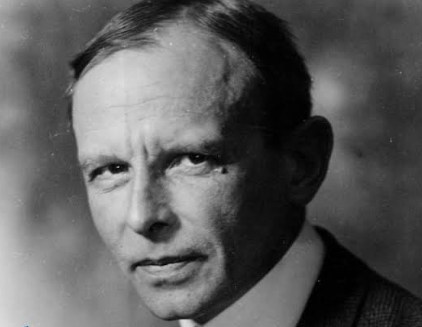
Karl Terzaghi (1883-1963) was an Austrian mechanical engineer, geotechnical engineer, and geologist, renowned as the “father of soil mechanics and geotechnical engineering.” His groundbreaking work revolutionized the understanding and application of soil behavior in civil engineering.
Early Life and Education
Born in Prague on October 2, 1883, Terzaghi studied mechanical engineering at the Technical University of Graz. His early interest in theoretical mechanics laid the foundation for his later work in soil mechanics.
Founding Soil Mechanics
After completing his studies, Terzaghi embarked on a career as a consulting engineer, specializing in foundation engineering. Through his experiences with various projects, he began to recognize the lack of scientific understanding of soil behavior. This realization led him to dedicate his life to developing a systematic approach to analyzing and predicting soil properties and behavior.
Terzaghi’s most significant contribution was his book, “Erdbaumechanik,” published in 1925. This groundbreaking work presented a unified theory of soil mechanics, incorporating concepts from geology, physics, and mechanics. It established the fundamental principles of soil mechanics and provided a framework for engineers to design structures that could withstand the forces exerted by soil.
Impact and Legacy
Terzaghi’s work had a profound impact on the field of civil engineering. His theories and methods are still widely used today, and they have enabled engineers to design safer and more efficient structures, such as dams, bridges, and buildings.
In recognition of his contributions, Terzaghi was awarded numerous honors, including the Norman Medal and the Frank P. Brown Medal from the American Society of Civil Engineers (ASCE). He is considered one of the most influential figures in the history of civil engineering and is often referred to as the “father of modern geotechnical engineering.”
 Rigid Academy-Building is an Art
Leave a comment